In the face of countless global affronts to justice, it can easily become overwhelming to begin to imagine understanding enough to bring even a single solution. More than overwhelming, it can become paralyzing.
Years of schooling have taught us not only to find the "right answer," but also to find the "right way" of getting to that answer. Even our workplaces expect us to "act right," to fit into the mold of that particular company or department, and it can be disorienting to find ourselves swimming in a sea of international, or even domestic, issues that seem to have no easy answers.
There are ways, though, to put edges and outlines on the map, even a color key and topographical features, if we give it enough time and thought.
The easiest way to clear off the hidden parts of the map is to find out what other people think, to find out if they can see lines that are invisible to you. Knowledge is power, and, in this case, that power can, sometimes, be enough to jolt us out of our paralysis, enough to help us find a next step to somewhere, anywhere.
There are documentaries that can be watched online for free (and completely legally) and alternative news agencies that cover stories from a different bent than that of major networks, and of course, YouTube, Google, and Wikipedia are your friend. Maybe I'm just a nerd, but search engines are happy things.
Tuesday, June 29, 2010
Kenya Update
My internship supervisors just updated their blog (Go figure. Just because I leave the country doesn't mean that everything in Kenya came to a standstill.) If you're not already, you should make sure to bookmark and follow their blog. Check out the links on the side bar as well, as they have links to blogs from all three of the Kenya internship teams.

It might be hard to tell in this picture, but these are the Upwards soccer jerseys that my parents brought with them last August. They made it all the way from the desert of Eastern Washington to the desert of North Eastern Kenya, and, after a few months of waiting for the right time and place, Jason and Bekah passed them out to a group of boys that some of our friends have been working with.
The great thing about soccer jerseys is that what fits an elementary schooler in Tri-town can also fit a teenager in G-town.
Many thanks, once again, to everyone who helped to gather things for my parents to bring with them. The things that you sent are still being used to bless people through holistic ministry and outreach.

Righty and Vaeh (and Charis!) are going to have plenty of construction experience by the time that they are big enough to effectively use a hammer. In between a dozen other responsibilities, Jason has been working on the construction of a girl's school, in partnership with both Kenyan and Western Christians, a huge need in an area where universal primary education is still a relatively new concept (well within living memory) and girls were not, traditionally, considered as important to formally educate.
Every country and region has its own challenges when it comes to formal education. In this part of Kenya, even things as integral to the culture as following herds throughout the season can pose challenges to schooling. And, it's not just Christians who are trying to make a difference.
Check out this video to get an idea of some "less traditional" school models that are being used in the area -- or more traditional, depending on how you look at it.

And...because YouTube is my friend (especially on American speed internet), I finally got my hands on a good picture of the bridge that we crossed over every time that we went to the primary school for Bible club or computer classes.
This is part of the very few kilometers of paved road within the province, and there are occasionally crocodiles and hippos in the water underneath the bridge -- a little different than Minnesota, where the only thing under bridges are monstrously huge mosquitoes!
<><
Wednesday, June 16, 2010
Picture Story
My senior class was sitting around the other day, in between our last class period and lunch, when one of the guys decided to entertain us all with a tub of playdough and an old-school overhead projector.
Maybe we've just spent too long without the constant stream of entertainment that comes in the States, but we were quite entertained. (Yep. Most of the…volume in the room was the Kenya team. Somehow, even though we are “technically” the most introverted of the teams, we came out the other end of internship the loudest…)
There was no narration – other than constant comments from the audience – so, I’ll let you decide what is going on in the story.
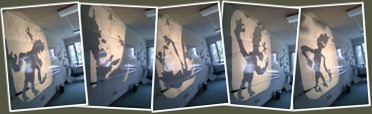
Becoming the Answers to Our Prayers
Sitting in chapel today, as we talked about and prayed through issues that place children worldwide at risk, I started noticing an interesting trend.
My classmates who were leading the chapel had focused in on four “risk factors” that they felt are the biggest issues facing children today; poverty, oppressive rituals and traditions, slavery, and war or other forms of violence. They gave equal attention to each of the issues and personalized each one with stories about particular children.
Any World Vision advocate would have been proud.
But, when we started praying corporately, it was as if all but the middle two issues faded completely off of the map. It almost seemed as if we were hesitant to pray for a solution to poverty or war.
In some ways, it makes sense. Growing up in the Church, you hear verses about how the poor will always be there, and warnings that there will be wars and rumors of wars, maybe so much so that we have given up on those issues. Relegated them to the back corner of things that “just happen” and we have no power over.
Some quiet part of our brains whispers that it won’t do any good anyways, and another part agrees. That other part, somewhere deep in our emotional hub, would rather spare the relatively quick burst of emotional energy needed to become temporarily angry over the issue of sex trafficking or FGM than sustain the intellectual muscle required to reexamine our paradigms of poverty and violence.
Making that jump from an emotional response to an intellectual one is hard work, and not something that come naturally, maybe more so because we know, in that deep, gut level sort of way, that, if we really, truly pray for solutions to poverty or violence, we might find ourselves becoming the answers to those prayers.
Which, leads to an interesting question.
When we talk about issues of social justice, are we really willing to be the answers that we are looking for, or are we just talking in order to appease our own sense of guilt?
Is there a purpose to knowledge if it comes without action?
Wednesday, June 9, 2010
Sun on My Face
For all that it is already June, it is NOT VERY WARM here in Minnesota, or, from what I hear, in the Tri-Cities either. Of course, that gives all the more reason to soak up the sunshine on the days that it does pop it’s head out from behind the rain clouds.
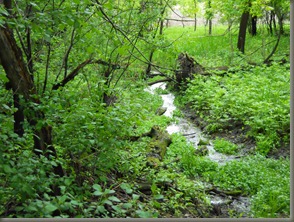
And, sometimes, it just means ducking my head down and ignoring the steady drizzle that is different from the sudden downpours we would get in G-town that it almost seems wrong to refer to them both as “rain.”
Saturday was one of those, just pretend it’s not raining, sorts of days, as Esther and I spent hours on a not particularly efficient public transportation system, trying to get downtown to the farmers’ market. Let’s just say…a matatu driver could have gotten us there in a quarter of the time, although much les sedately.

Nonetheless, we did make it, and I am currently attempting to pickle the asparagus that I bought. Knowing my lack of skill in the area of food preparation, this could turn out to be an adventure. But, surely there is not too much that can go wrong with something that sits in a cupboard and ferments for a few weeks. Fermentation is one of those things that nature does on its own. We’ll see how well nature and I get along when I try to harness it. Lol.

It may be summer now, but fall is coming faster than I had looked for, and, if we actually intend to eat during the social justice month, I had better start learning how to cook. Next step: something more complicated than pickles.
Any suggestions?
Tuesday, June 8, 2010
What If?
What if, as Christians, we gave up living according to the world’s standards – and not in a “we wear long dresses and blow up abortion clinics” sort of a way?
The challenge today is to find the things in our culture that bring us closer to the people we are supposed to be a living witness of Christ to, and to find the things that pull us farther away from them.
Sometimes, the best way to get an idea of the big picture is to get just far enough away from it all to see it from a different angle. (Think of it like climbing a tree as “it” in hide and seek. Suddenly, you can see exactly where everyone is hiding.)
Of course, our culture says that that is crazy, that there is too much to be doing to take time out to climb trees, to learn to see a picture bigger than ourselves. What the culture doesn’t understand, is that there is too much going on in the world not to learn to see that way.

The Way Things Change

I was talking with a friend a few days ago about future plans, and how hard, but good, it is when God upsets those plans and dreams and replaces them with something else, something that will bring His glory and expand His Kingdom in ways that we never would have imagined. Speaking for no one but myself, I can see over and over again how that has been true in my life.
Growing up, I was going to be a writer, or a painter, or an astronaut, or any of a dozen different things – all at once, of course, because, that way, I wouldn’t have to pick just one. Never for a moment was I going to do the things that I read about in missionary biographies. I was going to write stories like those, not do them.
Things changed, and I was going to get a degree in youth ministry, or sociology, or linguistics at a school that everyone knew the name of, with professors that taught things I couldn’t find the answers to on my own. Never for a moment was I going to attend a tiny school that was only partially accredited or get a degree in Intercultural Studies or write so few research papers that I could count them on one hand.
I was going to take time off and thru hike the Appalachian Trail, or the Pacific Crest Trail, or backpack through Europe. Nowhere on my mental calendar was there a chunk of time blocked out for going to Africa, let alone spending sixteen months in Kenya.
If I wrote a book, it was going to be fiction, something to replace the endless stream of historical romance that tries to pass itself off as adult Christian fiction. A non-fiction book on social justice activism was nowhere on the radar.
When Kenya did come into the picture, I was going to work with street kids, or teenagers, or at least mainly boys. Nowhere were there plans to spend months in an office working with someone on a preschool curriculum or to spend hour after hour playing with the daughters of different missionary families.
After school, I was going to relax, live quietly for a while, get a job, and raise money for a future in Nicaragua, working with kids, still mainly boys, who live on the street. Never for a moment, was I going to ask people to do the impossible, to set apart a month of their lives – or the lives of their children – purely for the purpose of growing in an understand of God’s heart for justice.
My goal in life, even after Nicaragua came into the picture, was to be a pseudo wall flower, never attracting too much attention or doing anything too strange. Obviously, God had other plans.
What about you? Where has the Lord taken you that you never thought you would be?
(The picture choice was more or less completely random, but I tend to think that living in the desert and being fed by ravens probably wasn’t high on Elijah’s bucket list either.)
Sunday, May 30, 2010
Keeping it Out
While there isn’t anything intrinsically just about living in another country, it is a lot harder to come up with a legitimate response to poverty when poverty is no longer calling your name – sometimes literally – when you walk out your front door every morning.

For whatever reason, it is easier to look down your dusty dirt road and come to the realization that there is someone living within a five minute walk who will go to bed hungry than it is to look down your paved driveway and realize that, if you were to get in your car and drive for ten minutes, you would find the same thing.
In Kenya, where windows have screens and bars but no glass, and closed doors leave a gap a few centimeters from the ground, it’s harder to keep things out and harder to keep things in. But, in America, where our houses seal tightly enough to keep in the AC or the heat, and no one would ever dream of coming to peep in your windows, it becomes easier to pretend that life in our boxes is all that there is. To assume that what happens in our houses, our cars, our schools and offices, is all that there is to reality.

So, we do things that force ourselves to come face to face with reality. We go on missions trips and watch movies. We read books, and sign petitions, and, sometimes, we do crazy things, because we realize that there is more to life than our box.
Saturday, May 22, 2010
Sunday, May 16, 2010
Three Weeks Stateside
Life has been crazy, but good, in an almost completely different type of good than in Kenya (including a computer that decided that it was time for it's life to end, and that it should eat all of my non-backed up pictures and documents from the last three weeks in the process...).
After spending a few days in New York with Melissa, I landed back in the Tri-cities for a week and a half of oh-crud-Jessica-hates-public-speaking moments. Lol. No, it wasn't really as bad as all of that, but the irony of the situation was not lost on most people who have known me since my "holding up the wall" underclassman days of high school.
Okay. Who are we kidding? I still prefer to hold up walls. :P
By the end of my time at home, the elementary, middle school, high school, and college groups at church had heard stories about our town in Kenya, as well as a good chunk of adults who came to the open house. Plus, at last count, at least seven middle or high school guys ended up wearing the "man skirt" or kikoy that I brought back with me...although, I never did convince my dad to try it on. Apparently, you become much too mature for such things after the age of forty. (Love ya, Dad!)
He did help put together a "hut" for the open house presentation, and he even forgave us for never getting any pictures of the finished product. Or any pictures of the night, for that matter, including the pillau and sukuma that my Mom and Mrs. Adams made, or the brave few who actually ate said food with their fingers.
All in all, the presentations were a good thing, even if just for the fact that they gave a chance to reconnect with people that I hadn't seen in sixteen months. (And, it was super funny to watch the faces of kids who I had as kindergarteners in 06-07, as they tried to decide if I really was who they thought I was.)
One of the girls, who had been in my CHECK class, told me after middle school sunday school that, "You haven't changed at all!" Not sure if that's a good thing or a bad thing, but, hey, I'll take what I can get. Lol!
Wednesday, May 5, 2010
Homeschool Resources
CHECK kids and parents,
For those of you interested in additional resources - just in case the end of the school year isn't coming up quickly enough already - I pulled together a few pages that might be useful.
This outline map shows all of Kenya's coastlines, boarders, provinces, and major cities. (The answers can be found here.)
This site has a list of simple vocabulary words - Swahili is phonetic, and pronounced almost like Spanish, so faking it isn't hard to do. If you want more vocabulary and/or a more interactive learning program (or don't trust your invented pronunciations), this site has a free software download that works on a flashcard principle.
The Peace Corps has put together a game that addresses a range of common community challenges (water, malaria, education, etc) that is friendly to most ages, although younger students may need help with reading, as well as a lesson plan that deals with water accessibility in the US, Ghana, and Kenya, and a handbook that addresses cultural understanding (aimed at older students).
Have fun, and let me know if you find anything else online that you think out to be added to the list.
.
Subscribe to:
Posts (Atom)
Brains and Boxes
Nine years ago, I sat on a dark rooftop with an uncertain and frustrated team. Frustrated by the four walls that seemed to be hemming t...
-
Someday, I will be able to think of this day of the week without the song running through my head... In the meantime, I”m excited to see y...
-
 Last week, we read a really long story about all sorts of God things. We read about how Jesus lived, and we read about some of the things t...